SEQL athlete app — designing the data engine behind a two-sided recruiting platform

Built the athlete-facing half of a connected recruiting ecosystem. Turning static, untrustworthy profiles into continuously updated records that gave the recruiter platform something to actually rely on.
Role
Lead Designer + Researcher
Product type
Consumer iOS (React Native)
Timeline
Mar 2021 - Sept 2021
MacBook mockup
01 - the context

The recruiter platform was only as good as the data feeding it

The SEQL Athlete Discovery App gave college recruiters a better way to find and track prospects. But a recruiter platform is only as valuable as the athlete data inside it — and that data had a fundamental problem: athletes weren't maintaining their profiles in a way that mattered to recruiters.

The athlete app wasn't a standalone product. It was the input layer of a connected system. SEQL had acquired a basic athlete profile web app from an external agency, and my job was to redesign it as a native iOS app — not just as a better profile tool, but as the mechanism that would keep the recruiter platform trustworthy over time.

The app launched on the iOS App Store as SEQL's MVP. Funding constraints limited development beyond that initial release.

02 - the users

13 to 19 years old, across 24 sports — at every stage of recruiting awareness

The user base was genuinely wide. A 9th-grade soccer player who has never thought about college has almost nothing in common — motivationally or informationally — with a senior swimmer in active conversations with D1 programs. Both needed to be served by the same product.

Early-stage athlete

13–15, just starting to think about college. Needs education on what the process even looks like before they can build a useful profile.

"I don't really know what recruiters are looking for yet."

Active recruit

16–18, in direct contact with programs. Needs a polished, current profile and a way to stand out from comparable athletes at their position.

"I need recruiters to actually see my highlights and stats — not just a profile I set up two years ago."

03 - the problem

Athletes weren't inactive — they just weren't guided

The tempting diagnosis was that athletes were lazy about their profiles. The real finding was different: athletes had no signal about what mattered. Existing platforms treated profiles as static documents — build it once, leave it alone. There was no feedback from recruiters, no indication of which fields were most searched, no prompts to update key information as it changed.

"Kids are spending thousands of dollars a year on platforms that, from the college recruiter perspective, are worthless."

— D1 recruiter, user research interview

The consequence of all three problems compounding: recruiters stopped trusting athlete data entirely. Which meant that even athletes with genuinely strong profiles weren't getting seen. The system had broken down on both sides simultaneously.
Dashboard mockup
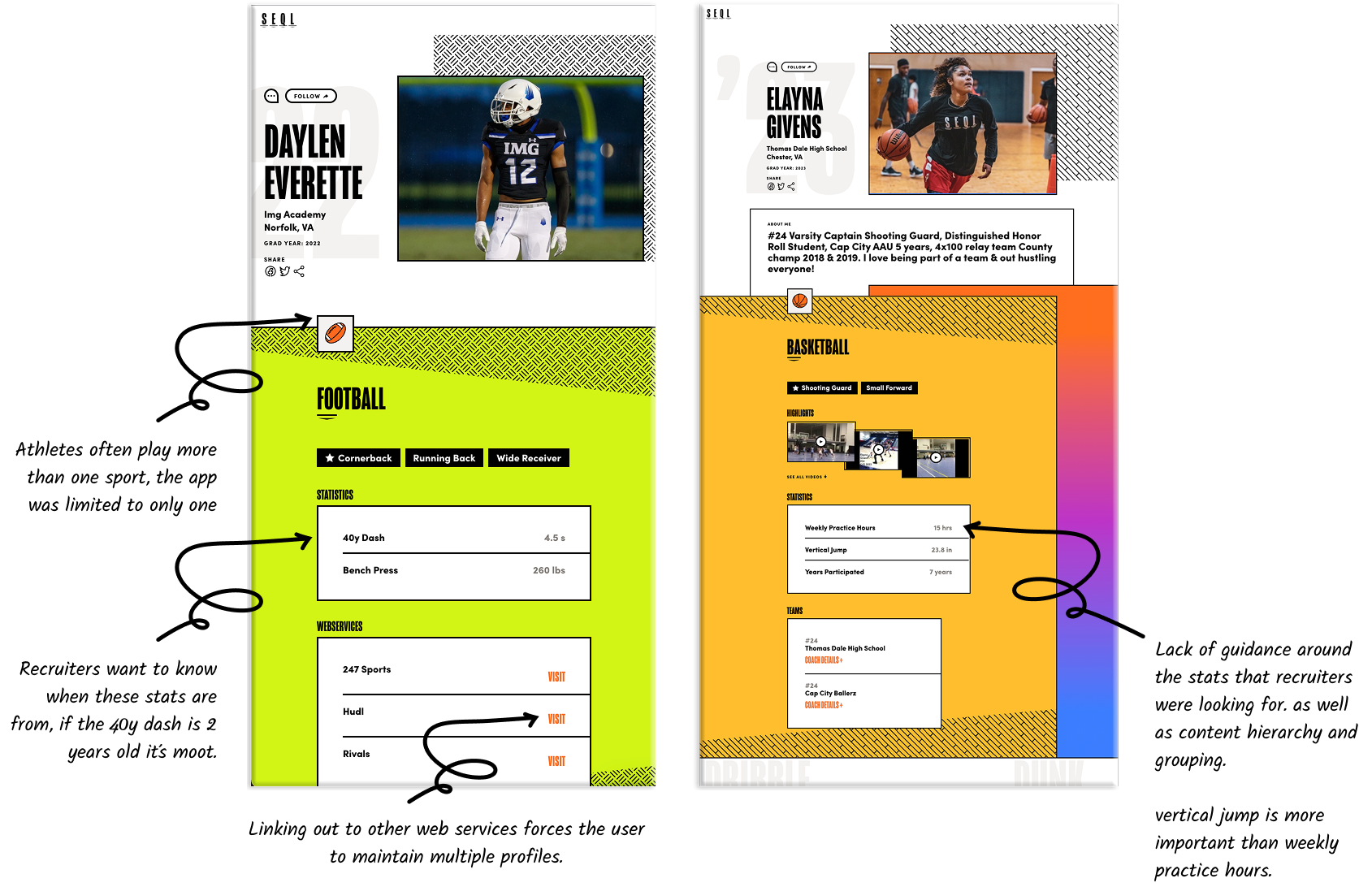
problem  1

Designed for self-expression, not evaluation

Sport-specific color themes and decorative patterns prioritized athlete identity over the data recruiters needed. The visual language signaled "my profile" not "my recruiting record."

problem  2

No signal on what mattered

Athletes had no visibility into what recruiters were actually searching for. They'd complete the fields they understood and leave the ones that mattered most blank.

problem  3

Links out to competitor platforms

The "Webservices" section linking to 247 Sports, Hudl, and Rivals was a structural admission that the platform's own data couldn't be trusted — redirecting recruiters elsewhere to verify what athletes had self-reported.

04 - the opportunity

Solve engagement and you solve accuracy

The strategic insight: the problem wasn't athlete engagement in the abstract — it was that there was no feedback loop between what recruiters needed and what athletes were providing. Close that loop, and profiles would naturally improve over time.
Dashboard mockup
opprotunity 1

Guide completion around recruiter needs

Structure profiles around what recruiters actually search for — and make that visible to athletes, so they know which gaps matter most.

opprotunity 2

Connect recruiter requests to athlete actions

A direct notification pipeline from recruiter to athlete would create an active update mechanism rather than relying on athletes to self-manage.

opprotunity 3

Make updating feel worthwhile

If athletes understood that profile updates directly improved their search visibility with recruiters, they had a real incentive to keep data current.

05 - the design process

Research, parallel design, and a feature hypothesis that needed testing

Because the athlete app and the recruiter platform were built in parallel, design decisions in one product had direct consequences for the other. The two teams worked closely throughout — which meant I needed to understand the recruiter-side data needs as well as the athlete-side experience.

Sport attribute research

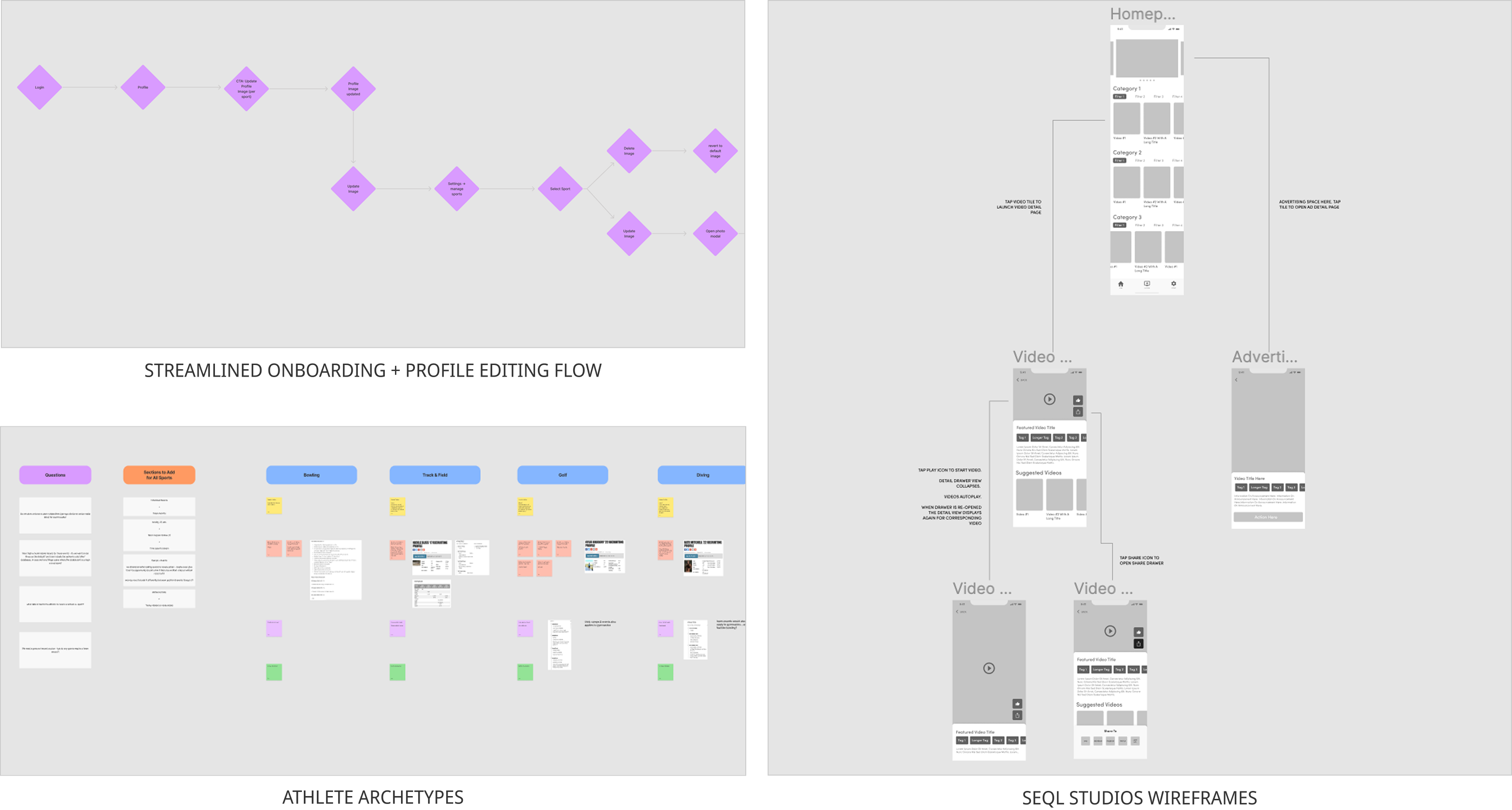
Before defining the profile structure, we mapped recruiting attributes across all 24 sports SEQL intended to serve. The finding was clear: no two sports share the same primary measurables, and a generic profile structure would be irrelevant for most of them.

Student athlete product champions

We worked with a group of high school athletes throughout the design process — testing new flows, reacting to early prototypes, and surfacing language and mental model issues that wouldn't have been visible from the outside. This was especially valuable for the onboarding flow and the profile completion guidance, where the gap between "what a designer thinks is clear" and "what a 15-year-old actually understands" was significant.

Phone-first onboarding

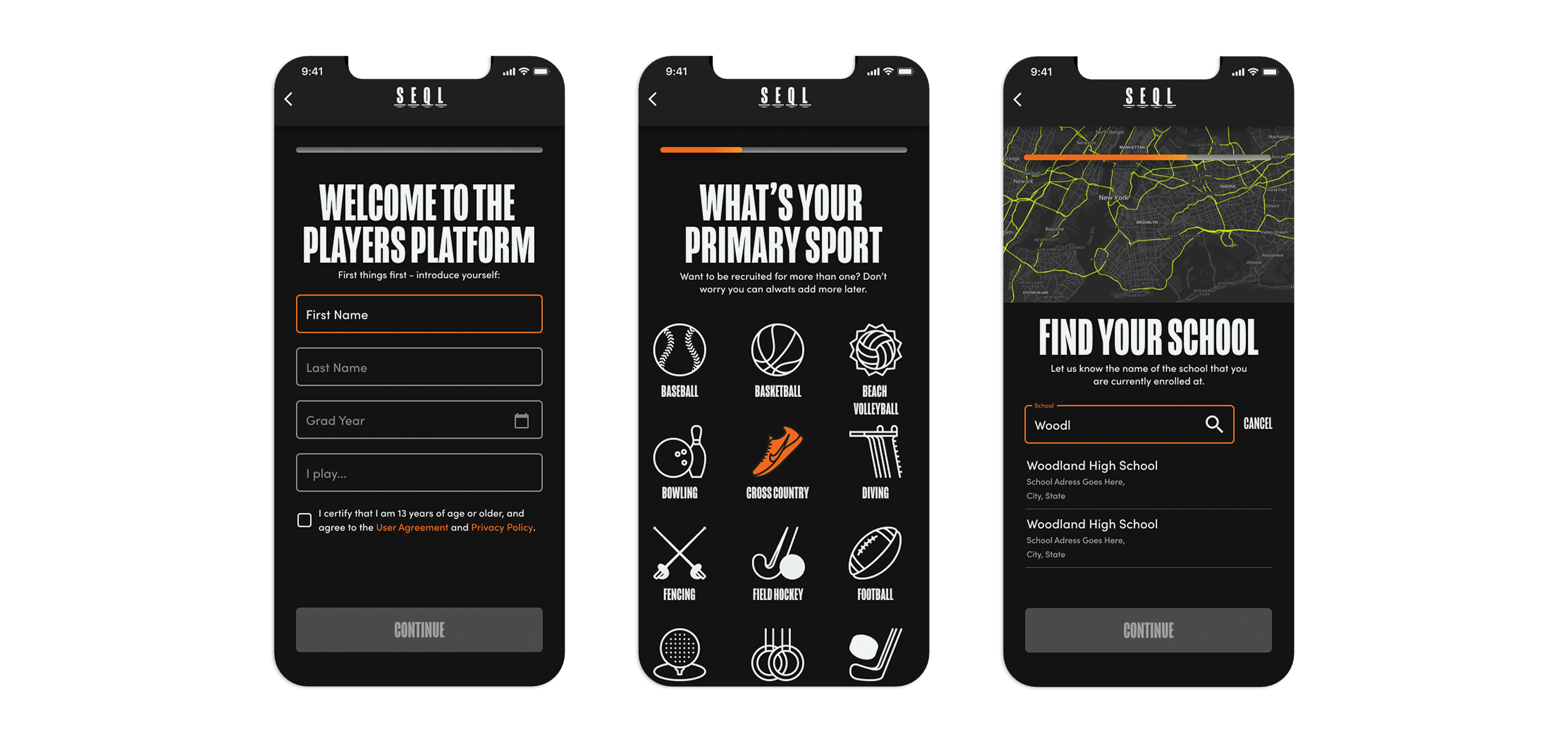
A research-driven decision: we led with phone sign-up rather than email. Athletes frequently changed email addresses — especially during the high school to college transition — leading to account lockouts. Phone numbers were stable and the preferred channel for recruiter communication.

06 - the solution

The input layer of a connected ecosystem

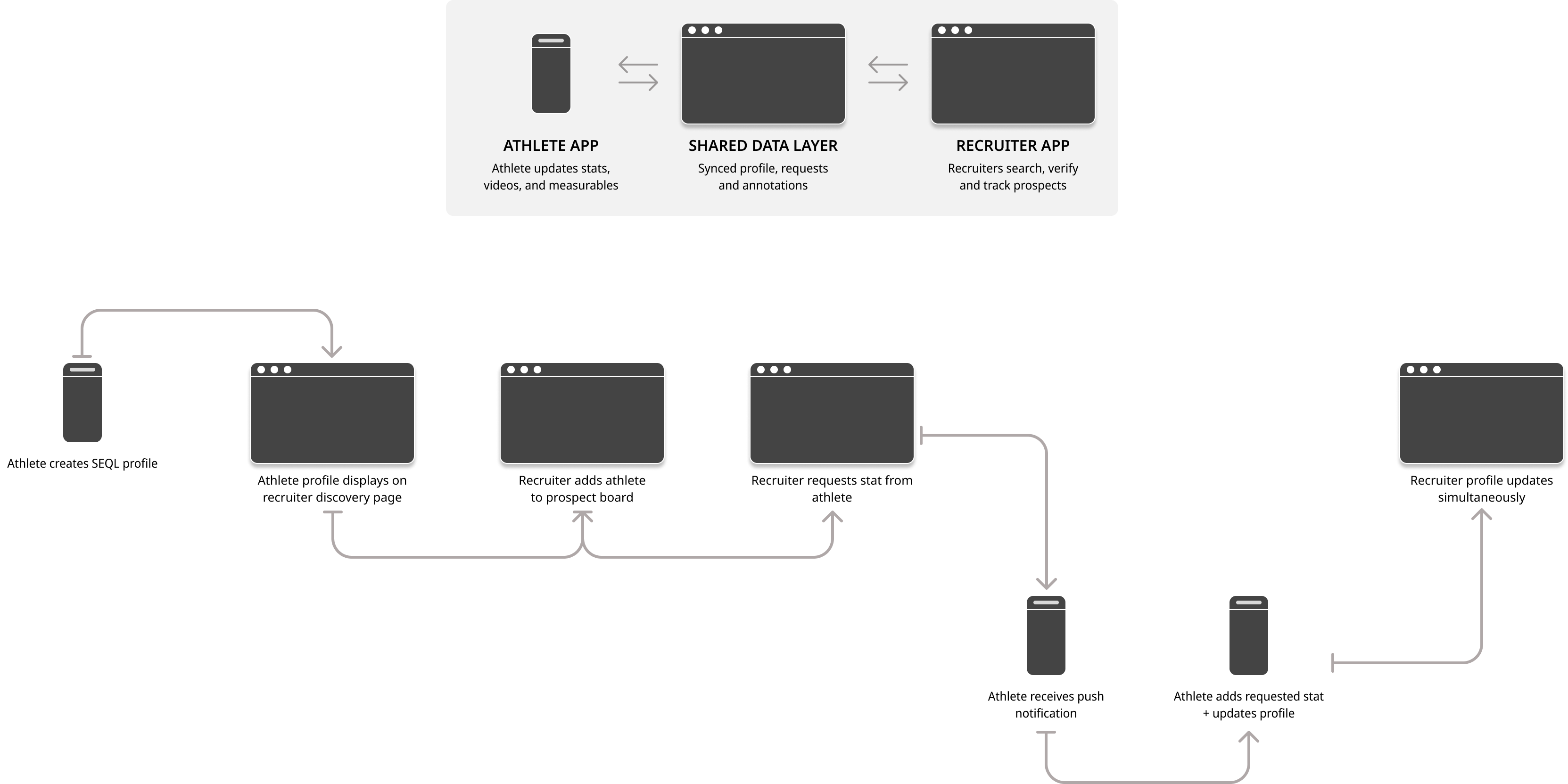
Every action an athlete takes in the app directly impacts how they appear to recruiters. The architecture makes this explicit — and creates a real-time feedback loop that keeps both sides of the system improving continuously.
Dashboard mockup

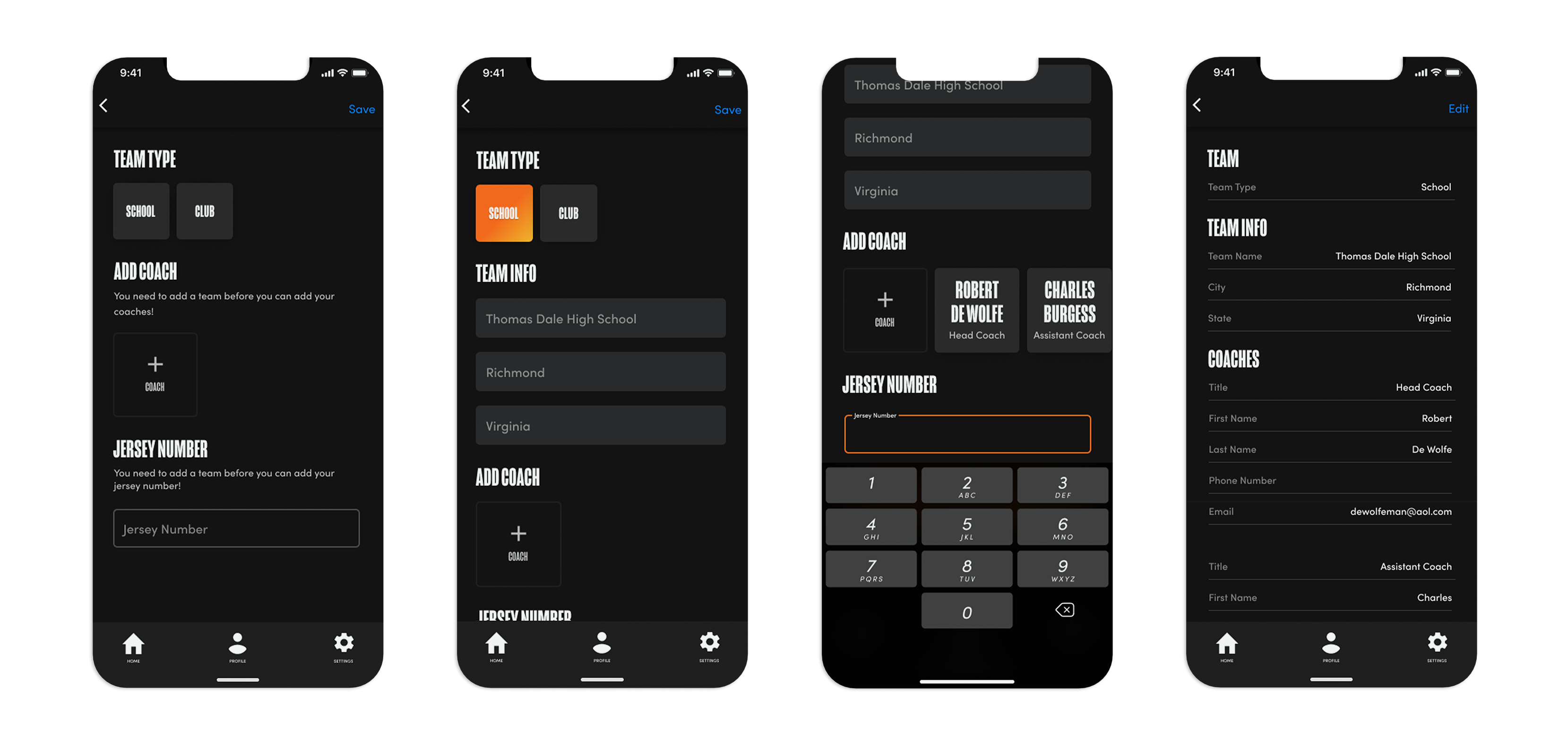
Guided Profile Completion

Profiles are structured around what recruiters actually search for — measurables, stats, video, and academic data — in priority order. Rather than presenting athletes with a blank form, the app guides them to complete the fields that matter most first, with clear signals about which gaps will most affect their visibility in recruiter search results. This was a direct response to the finding that athletes weren't neglecting their profiles out of laziness — they simply had no way to know what mattered.

Dashboard mockup

Recruiter request notifications

The strongest connection point between the two products. When a recruiter identifies missing information — an outdated 40-yard dash time, a missing transcript, a GPA that hasn't been updated — they can request it directly from the recruiter platform. The athlete receives a push notification, updates the information in-app, and the data syncs instantly to the recruiter's view. This mechanism keeps the system alive and continuously improving without relying on either side to self-manage proactively. It was also the feature that directly addressed the trust problem: verified, recruiter-requested data carried a credibility that self-reported stats never could.

Dashboard mockup

Real-time updates between systems

Athletes can update stats, add new footage, and reflect performance changes at any time — with updates immediately reflected in recruiter search results. The design deliberately made this feel lightweight and rewarding rather than administrative. Existing platforms gave athletes no feedback when they updated their profiles; SEQL surfaced the connection between updates and recruiter visibility explicitly, giving athletes a reason to keep data current beyond compliance.

Dashboard mockup

SEQL Studios

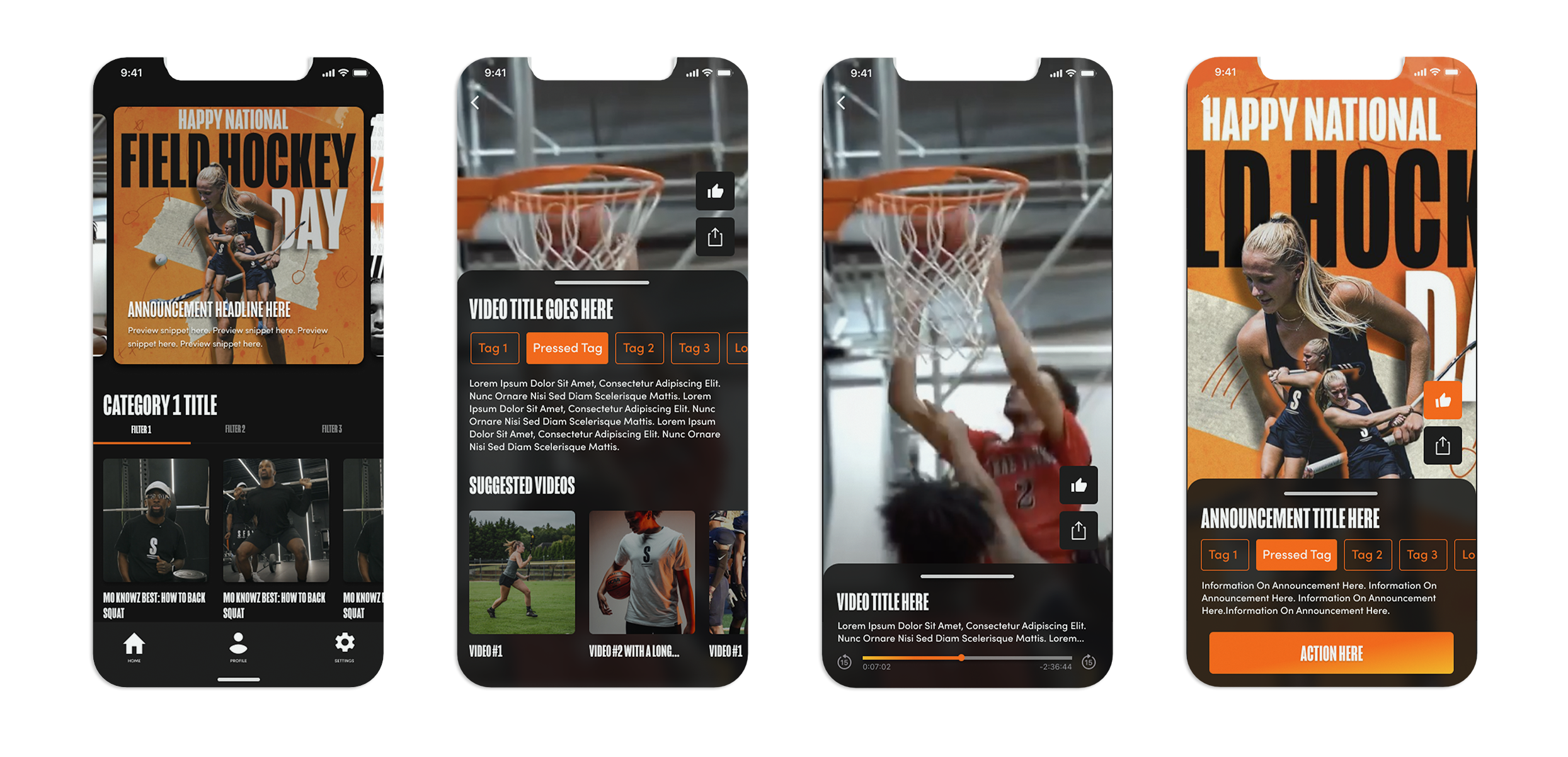
An in-app content hub with educational videos on the recruiting process, day-in-the-life content from current college athletes, sport-specific coaching from professional ambassadors, and spotlight videos of SEQL athletes. Studios addressed the engagement cliff directly — giving athletes a reason to open the app independent of profile maintenance, with the natural side effect of keeping them connected to their profiles more regularly. It also gave SEQL a genuine differentiator: no competitor was offering athletes education on the process they were navigating.

Dashboard mockup

Responsive desktop view

Onboarding was redesigned around phone as the primary identifier — more stable than email across the high school to college transition and already the preferred channel for recruiter communication.

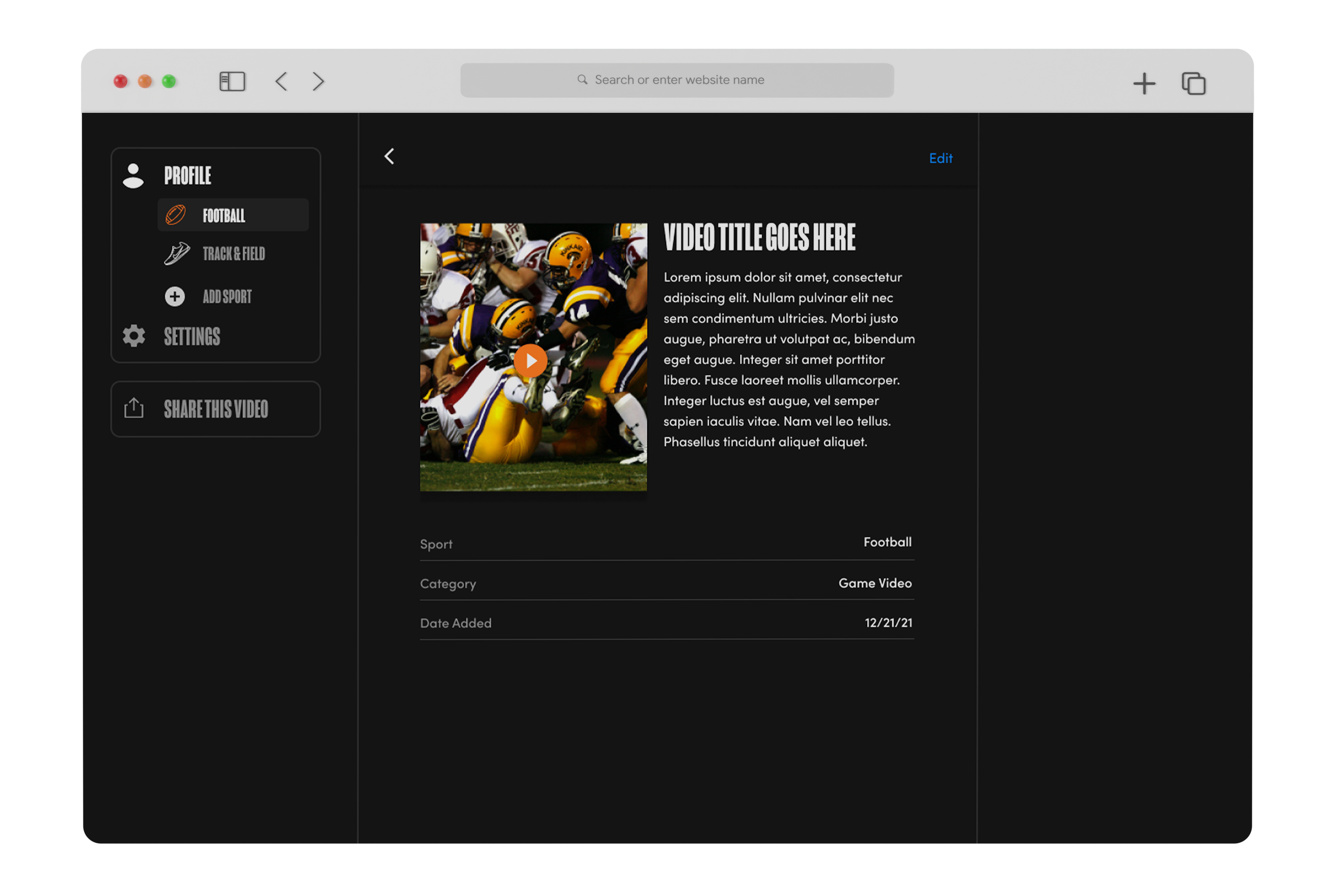
A responsive desktop editing view was also built for athletes who preferred managing their profile on a larger screen, maintaining consistency with the iOS app while optimizing for a different context of use.

07 - metrics

From static profiles to living records

The app launched on the iOS App Store as the MVP powering SEQL's recruiting ecosystem. Studios drove measurably higher return visit rates compared to the profile-only baseline, validating the engagement hypothesis. Funding constraints limited development beyond the initial release — but the two-sided architecture the product established demonstrated that the trust problem in college recruiting was solvable. Not by building a better profile viewer, but by designing a system where both sides had an active role in keeping data accurate.

For athletes


• Clear direction on what to update and why


• Increased visibility in recruiter search results


• Direct connection to recruiter needs for the first time

For recruiters

• Profiles that improved over time


• Request mechanism replacing manual follow-up


• Data tied to verified recruiter requests

What I'd do differently

The 13–19 age range is genuinely wide, and most of our usability sessions — even with the student athlete champions — skewed toward upperclassmen already deep in the process. Younger athletes have meaningfully different mental models of what recruiting means, and the onboarding and educational content would likely be more age-aware with more testing at that end of the range. I'd also push harder on measuring the recruiter-side impact of athlete updates — we designed the feedback loop but didn't instrument it well enough to quantify how much profile completeness actually moved recruiter behavior.