Also Organics (ST8MNT)
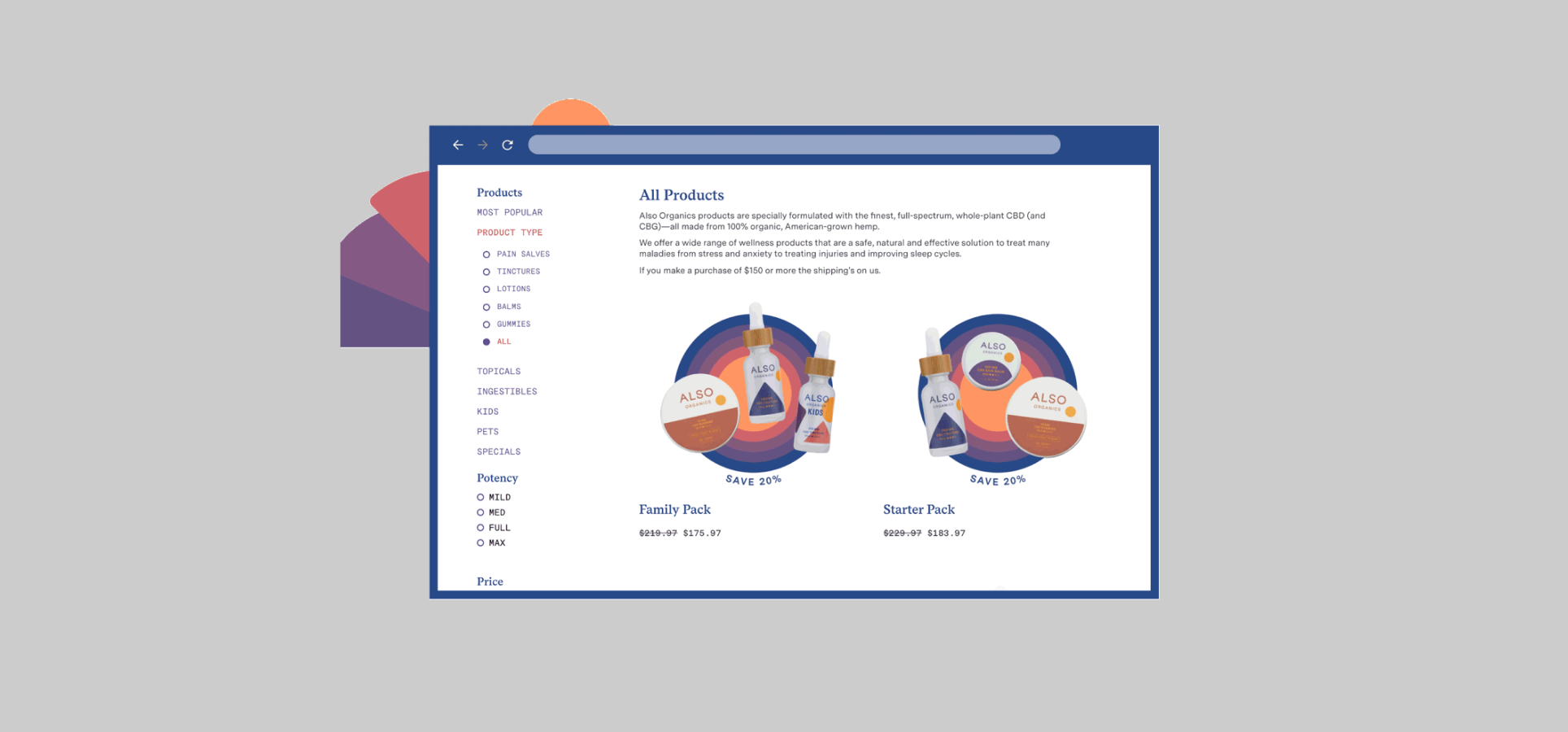
Discovery + User Research
"I'm curious about CBD for my joint pain, but I don't know where to start or who to trust. Most of these sites feel like they're not talking to me."
The CBD market had two compounding problems that the site needed to address:
- Widespread consumer skepticism. Despite growing interest in CBD for health and wellness, many potential customers — particularly older demographics — were held back by misinformation, uncertainty about legality, and a lack of trusted information about actual health benefits.
- A narrow industry visual language. Most CBD brands were designed for a young, wellness-savvy consumer. This left a significant portion of the addressable market — adults seeking CBD for chronic pain, sleep, or anxiety — feeling like the category wasn't for them.
The design challenge was therefore two-part: build a shopping experience that converted, and build a brand experience that made a broader audience feel seen and informed rather than alienated.
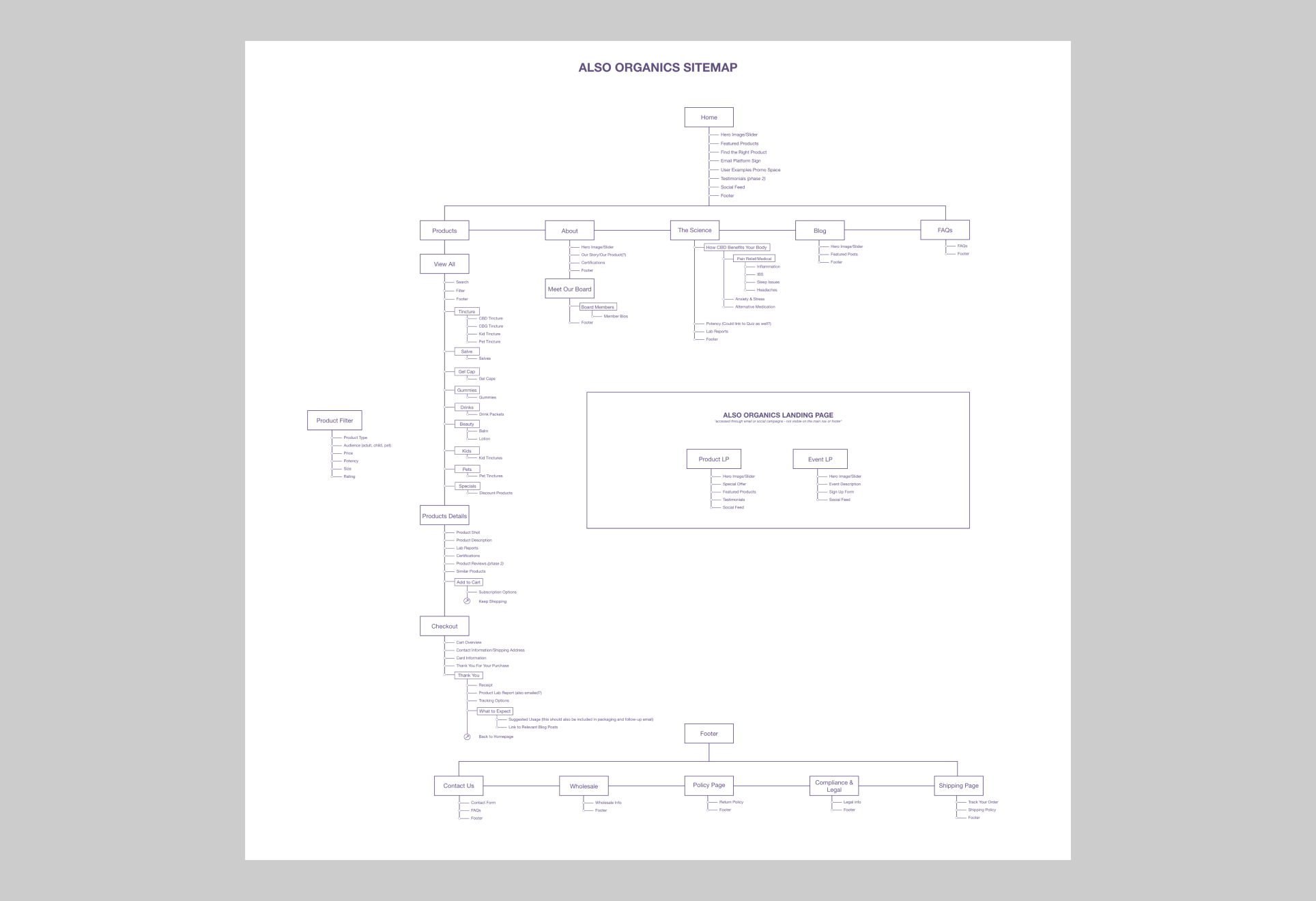
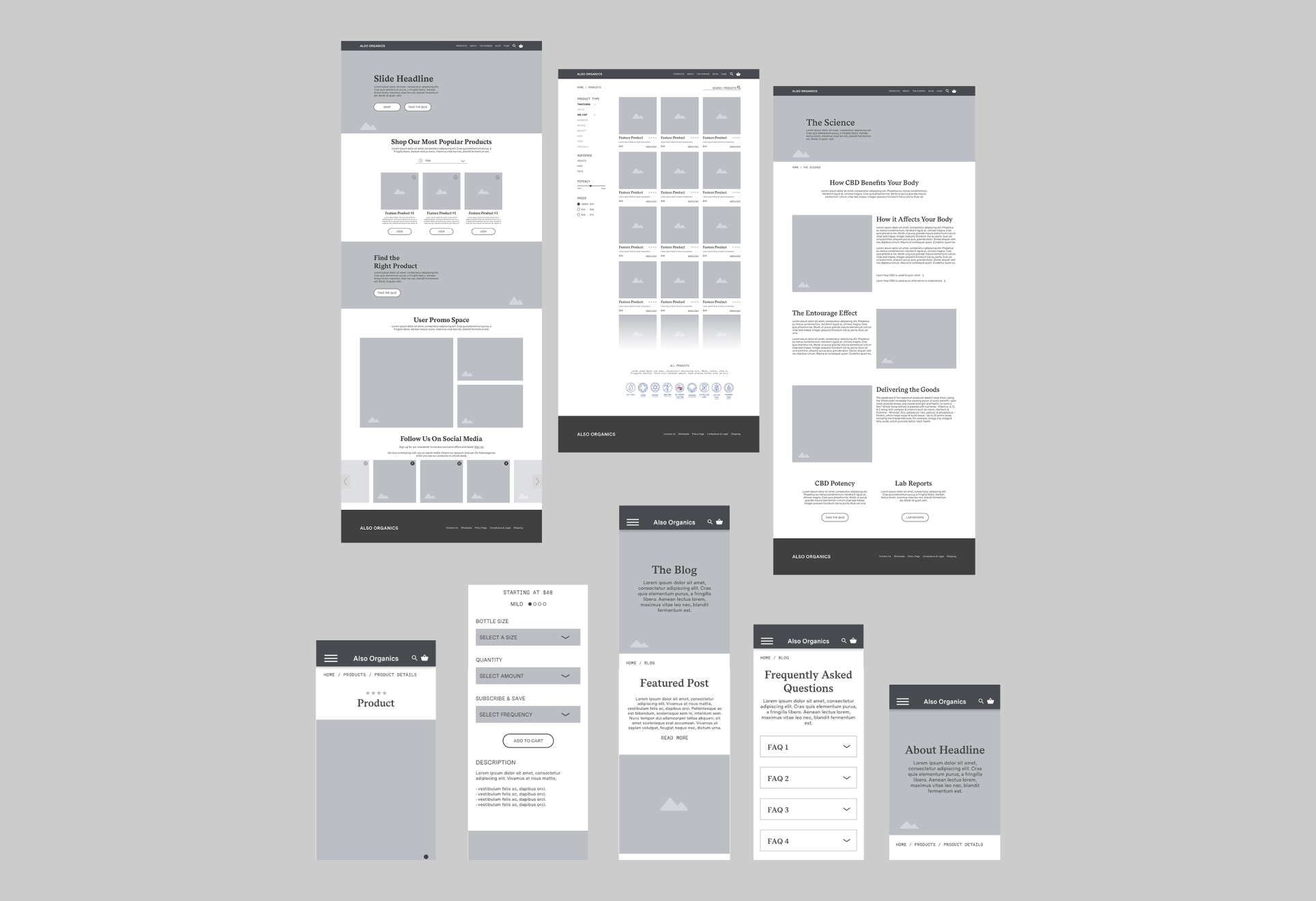
I established the site architecture through low-fidelity wireframes, working through the structure of each section before moving to visual design. The key structural decision was where to place educational content relative to product pages — too early and it felt like a lecture; too late and skeptical users had already bounced.
The solution was to weave education into the shopping journey rather than separating it into a standalone section. Product pages carried plain-language benefit content alongside product specs. A guided quiz surfaced before users were asked to choose between products independently. This kept the experience from feeling like homework while still addressing the information gaps driving hesitation.
For the visual direction, I pushed against the industry norm of muted greens and earthy minimalism. Also Organics' positioning as an active-lifestyle brand warranted brighter, more energetic visuals — with photography that showed a wider age range than competitors were using.
Execution + Learnings
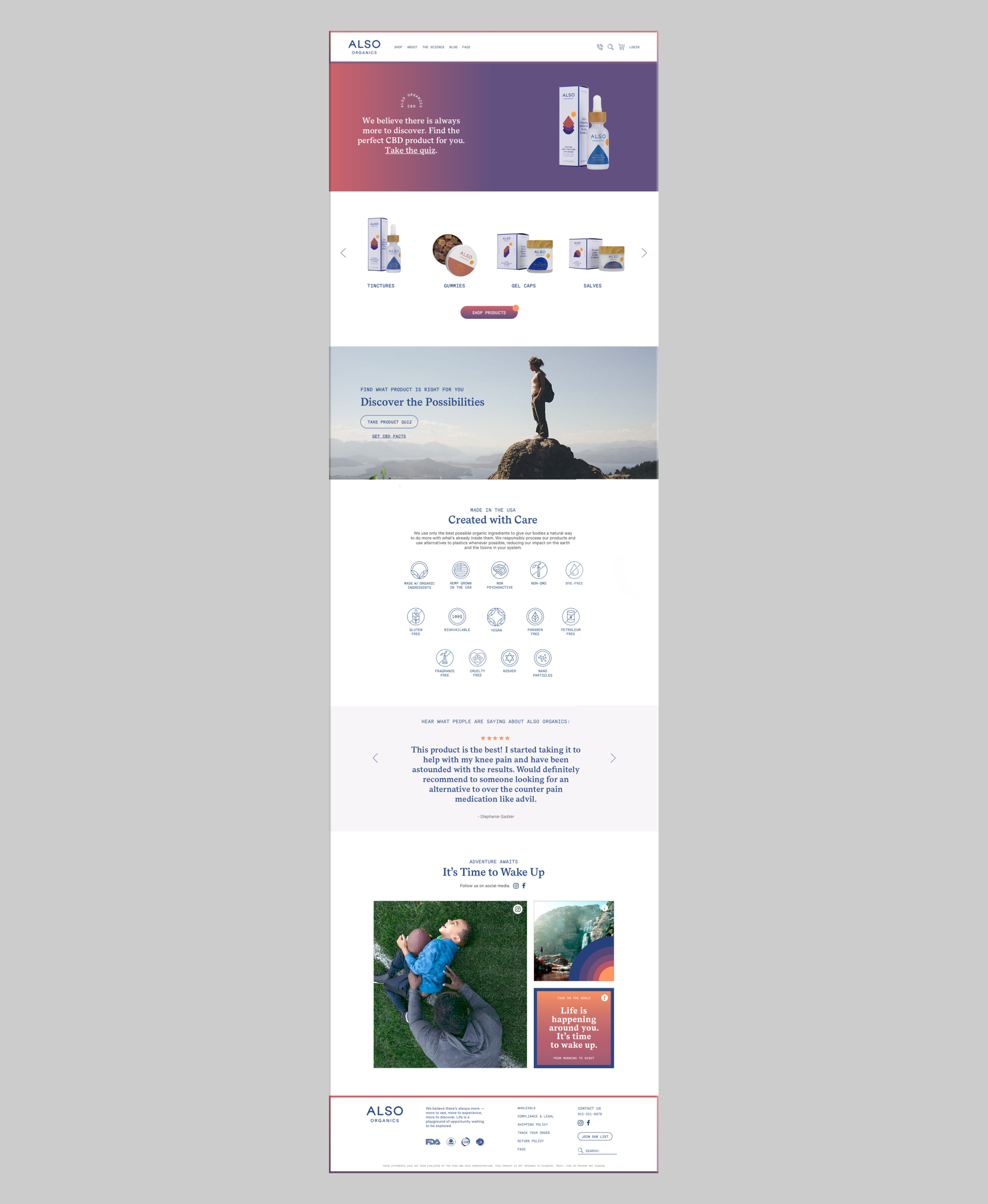


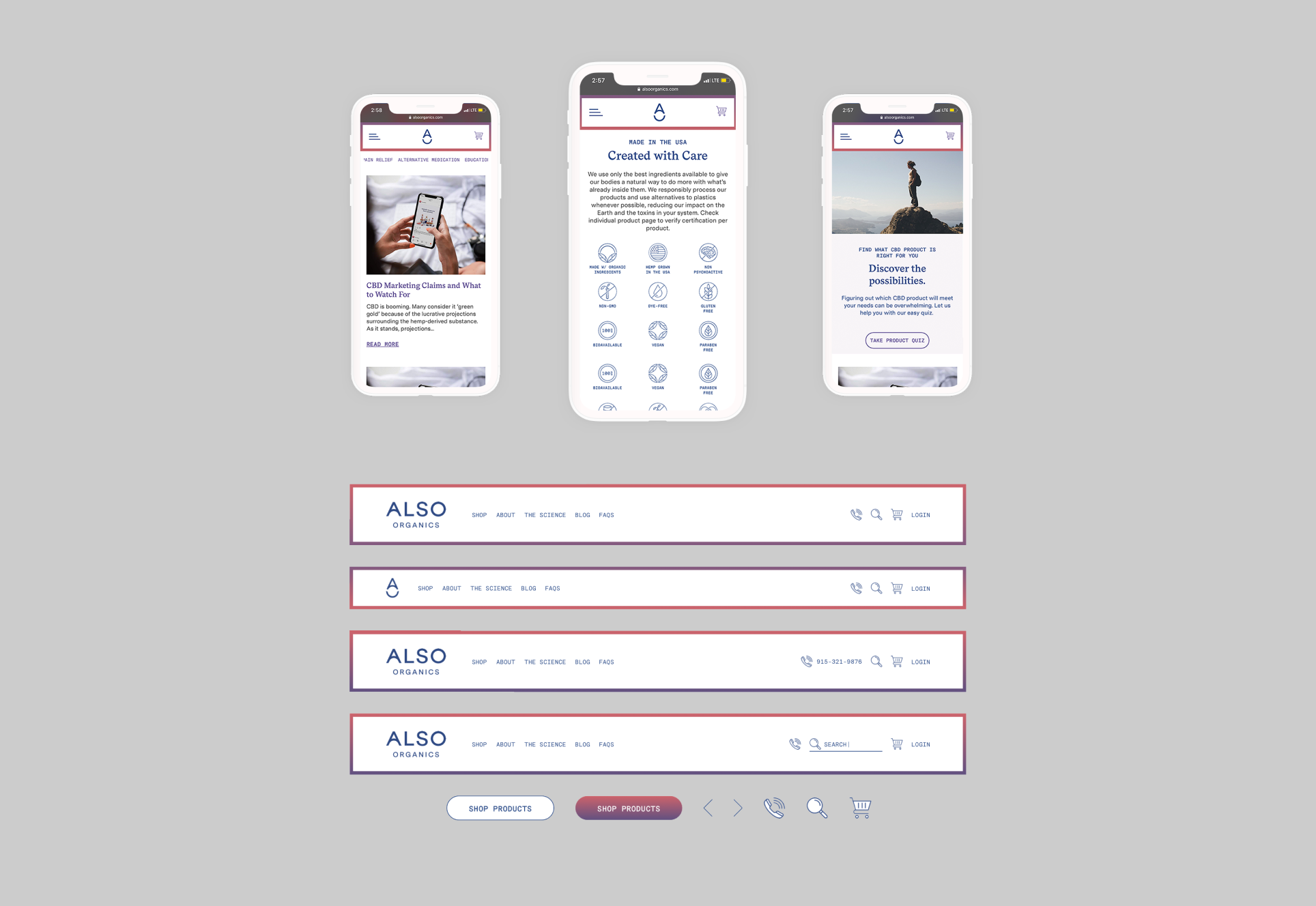
The site launched as Also Organics' primary e-commerce presence, giving the brand a digital storefront that matched its product quality and stood apart visually from category competitors. The quiz and educational content layers addressed the trust and information barriers that were holding back purchase decisions from older and first-time CBD buyers — the audience the industry was largely leaving underserved.
The educational content strategy was directionally right, but built largely on competitive analysis and assumptions about consumer knowledge gaps rather than direct user research. With more time, I'd have wanted to run even lightweight interviews with CBD-curious but unconverted consumers to pressure-test where the actual hesitations lived. Some of the information architecture decisions — particularly around how much education to surface before the shop — were judgment calls I'd feel more confident about with real user data behind them.